Thursday, July 19, 2012

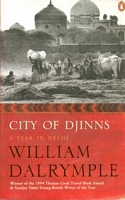
City of Djinns


Title: City of Djinns – A Year in Delhi
Author: William Dalrymple
Publisher:  Penguin, 2004 (First published 1993)
ISBN: 978-0-143-03106-2
Pages: 343

Dalrymple is an acknowledged Indophile whose other books have also been reviewed earlier in this blog, like The Last Mughal, The White Mughals and Nine Lives. He was born in Scotland and is a fellow of the Royal Society of Literature and the Royal Asiatic Society. Besides writing, Dalrymple has presented television documentaries on Indian topics. His wife, Olivia Fraser is herself an artist who has produced the remarkable illustrations adorning the pages of the book. The couple now divide their time between London and Delhi.

The book is in essence what the author saw and thought during his year-long stay in the Indian capital city in 1989-90. He borrows the concept of djinns (spirits said to have been created from fire) from Muslim folklore to make the theme of the book, a portrait of a city disjointed in time, a city whose different ages lay suspended side by side as in aspic, a city of djinns (p.9). The author peels through the thin layers of history surrounding the core of the city, the recent ones first. Thus, the British presence is dealt with first, followed by the struggle of the last of the mughals in 1857, consolidation of the British during early 19th century, last remnants of Mughal structure in the 18th, Shah Jahan’s founding of the city during middle-17th, Tughluk’s period during the sultanates, Prithvi Raj Chauhan, and into the mists of pre-history, like Indraprastha and Hastinapura of Mahabharata. Each section is amply made lucid by interactions with noted personalities from Delhi who has made it their speciality of study.

Delhi enters prehistory through the Mahabharata epic. The palace of the Pandavas, Indraprastha, was situated there. Though archeologists differ about the scale of magnificence of the Pandava structures, there is no denying, from excavated remains that a civilization which has produced fine pottery known as painted grey ware, has been flourishing along the coast of river Jamuna around 2800 years before. After a long hiatus, Delhi again comes into the picture with Prithvi Raj Chauhan who made the mistake of pardoning his Afghan enemy once in the war – Mohammed of Ghor! He came back with a larger force the next year, defeated and beheaded Chauhan in 1192, inaugurating six centuries of Islamic rule in the city. The middle ages saw flashes of splendour echoing along the streets of Delhi in the superb buildings made by emperor Shah Jahan. What we see in Old Delhi is the remains of fine structures built by that megalomaniac autocrat. 

Shah Jahan was ousted from the throne by his treacherous third son, Aurangzeb who declared war against the country and its culture. Lot of temples were destroyed or desecrated resulting in resentment throughout the empire. No wonder that the empire began to crumple no sooner Aurangzeb died in 1707. The 18th century was an era of palace intrigue, treachery, and degenerate morals. The British came on the scene not much later, who gradually sunk their claws into the flesh of Islamic society and mercilessly tore down the social order when it effectively crushed the rebellion of 1857. Lutyens modelled a new city, New Delhi, which remains the seat of power of the Indian government.

The book is eminently readable, with its presentation of characters throughout the chapters in the form ordinary Delhiites, like the landlord, the taxi driver, the Persian-language professor and numerous such people. One thing which emerges from the treatise is the helping mentality of the common people. It is not to be confused with the normal mindset of the people, who will nevertheless be willing to extend a helping hand to a foreigner staying amidst them. Dalrymple also displays an aspect of Indian society – venality – which permeates all spheres of society, be it politics, religion, social relations and administration. Indians must take note of this disturbing fact, which keeps on churning to the top from the writings of foreign authors, right from the 15th century Arab and Portuguese travelers. Dalrymple just confirms the notion in a gentle, apologetic way. The book is very humorous and is a delight to read. The section in which the author dissects through newspaper advertisements for arranged marriage is taking hilarity to new heights.

One downside which can be pointed out is that, as always, Dalrymple caters to British sensitivities about India. There is no arguing that the book appeals equally strong to the Indian reader, but a British one is more at ease while reading it. The native reader experiences a whole panoply of emotions like pride, curiosity, anticipation and even outright shame by going through the work, the foreign one feel a sense of déjà vu – it simply reaffirms what he had had already in his mind.

The book is strongly recommended.

Rating: 3 Star

Saturday, July 14, 2012

Physics of the Future


Title: Physics of the Future
Author: Michio Kaku
Publisher:  Allen Lane, 2011 (First)
ISBN: 978-1-846-14268-0
Pages: 368

A good work to guess the road science will take in the next hundred years. Michio Kaku, himself a world-class theoretical physicist, has produced this book after interviewing hundreds of distinguished scientists, each one master of their own particular field of study. The greatest pitfall one has to overcome in hazarding guesses about the future is the severe underestimate one normally makes of the potential of science. We are so groomed to the way things are at present, that we fail to appreciate how science can jump over the seemingly insurmountable obstacles we face today. Even renowned scientists are not free from such prejudices, as Lord Kelvin noted in a self-satisfied way in the 1890s that physics will be over in a few years! This was even before the development of quantum mechanics, relativity and the computer revolution that was to transform the 20th century into the most productive one in the entire human history.

The book is well categorized into salient points which are going to define the coming century. The future developments possible in computers, artificial intelligence, medicine, nanotechnology, energy, space travel, wealth creation and human civilization are identified and explained. Computers would become so cheap and ubiquitous that we may fail to see them as chips begin to be at the core of every conceivable thing we may use in the future. Kaku’s only alarm is the date on which Moore’s law may break down. The famous hypothesis states that computer power doubles in roughly 18 months. The law, formulated in the 1960s when computer age was just kicking off has stood intact so far, resulting in cheap computing power so that the masses can afford it. However, physical constraints would sooner or later put brakes on the application of the law, which would be a great barrier in progress for mankind existing at that time.

Human comfort will be boundless, with medicinal facilities in full stream, to eliminate all our diseases and dangerous conditions. Our life spans will be increased several fold and one would be able to choose the age to remain for a long time. Robots would accompany us everywhere, whose intelligence would be on near par with humans. The horrendous amount of energy required for all these endeavours will be generated by super-efficient mechanisms, like hydrogen, cold fusion, or antimatter. Interstellar travel may start to become possible around the end of the century. Kaku introduces a classification of civilizations based on the amount of energy they consume. A Type 1 civilization uses all the available energy of a planet, and can control the living conditions in the planet. A Type 2 civilization exploits all the energy of star, while a Type 3 civilization uses the energy available in a whole galaxy. On this scale, our existing society is yet to reach Type 1 status, the most we can claim is a Type 0.7 society!

Kaku muses over the nature of human relations in this advanced era. The nature of jobs available would radically differ from the current ones. Those who do repetitive and purely mechanical work may find themselves unemployed by robots. But pattern recognition and common sense are two aspect which the robots would not be able to achieve in the foreseeable future. So, people indulging in creative work like art, design, music and similar areas would flourish. Wisdom would be the one thing badly in need at that time. Commerce and trade also would transform dramatically. In place of the commodity capitalism in vogue, intellectual capitalism would dominate the earth. Information is poised to become a prized commodity of the coming era.

The book is splendidly researched, with inputs from hundreds of experts. However, Kaku’s narration pales into mere reporting when fields other than his specialization come into view. When confronted with the advances plausible in various areas like medicine and commerce, the quality of the output is not comparable to those from the fields of space travel or computers or artificial intelligence. The book ends with a relevant quote from Mahatma Gandhi, which every nation and every person should keep in their hearts, irrespective of the technical excellence of the society they live in. On the layout, the book spans 368 pages, which should be cut down a bit in future editions. Readers would definitely appreciate some brevity.

The book is recommended.

Rating: 3 Star

Wednesday, July 4, 2012

The End of Oil


Title: The End of Oil – The Decline of the Petroleum Economy and the Rise of a New Energy Order
Author: Paul Roberts
Publisher:  Bloomsbury, 2005 (First published 2004)
ISBN: 978-0-7475-7081-3
Pages: 341

No one, who is familiar with the vagaries of oil-dominated world energy order would doubt about the urgent need for a new order based on some other resource than oil. Uncertainties in supply, exploration, transportation and pricing make this commodity a hugely expensive one for most countries. Paul Roberts’ excellent work on the energy scenario and illuminating discussions about the future alternatives serve to be an eye opener to society. End of Oil, is a very good effort to strike at the root cause of the problem and suggest viable alternatives when supply of oil would surely be restricted in the not-too-distant future.

The book begins with a good introduction on world economy based on energy. It all started with firewood, but excessive cutting denuded the forests too soon, by middle ages. Around 13th century, wood was in short supply. Coal rose to fill the vacuum and rose to become a major commodity by 16th century. Coal’s dominance lasted for three centuries, but the discovery of crude oil, a cleaner fuel which also moved automobiles displaced coal from almost every sphere of activity in which the quantity is low. The last century was definitely an era of oil. It controlled every aspect of production, transportation and every sphere of economic operations. World wars were fought to control the sources of oil. Allied forces could win both world wars because they could force the Axis powers out of oil supplies. The lust for oil accounts also for unexplained events like Japan’s invasion of Pearl Harbour in 1941. It was mainly to prevent the U.S. Navy from blocking Japanese tankers reaching oil-rich Indonesia which was already under their rule. Similarly, Germany embarked on a disastrous invasion of USSR to reach the oil rich territories of Azerbaijan and nearby Caspian.

Today, the oil prices are booming. Much depends on the issue of when the peak in oil production appear. After that event, production would go down each year, though demand would continue its increasing spiral as more and more countries try to reach the rewards of economic upliftment. The estimates for available oil is very tricky – it also reflects the thinking of the organisation which prepared the estimate. Generally, governments and oil companies paint a rosy picture guesstimating the peak not to come before several decades are past. The U.S. Geological Survey (USGS) and Energy Information Administration are the two prominent organisations having extensive statistics, but their figures are wildly optimistic, deliberately designed so to placate political masters. As non-OPEC oil is exhausted, the world would be at the mercy of OPEC, which is politically unstable, religiously fanatic and still keeping an anti-Western, medieval mindset.

Climate change, resulting from man-made global warming is a very serious issue associated with the energy order based on oil. A way-out appeared in the form of Kyoto Protocol in 1997 which sought to curb the CO2 emissions by countries. The developed nations took the lead in declaring self-imposed restrictions in industrial emissions. However, the agreement was a dead horse right from the very beginning due to intransigent policies of the U.S who saw the entire episode as an orchestrated European plan to undercut the American economy by imposing crippling emission standards. U.S., the world’s largest polluter is not willing to acknowledge the fact and contribute to mitigating action. CO2 level, which is 370 ppm at present may shoot up to 550 ppm in the not too distant future, which would tip the world to irreversible warming. Reduction in emissions is only possible with new technologies. Fuel cell is an option, which generate electricity by combining hydrogen and oxygen. Emission is nil, steam being the only thing going out. At present, the technology is still in its infancy and costly. It faces huge engineering challenges to enter commercial viability, but with volume, the issues are expected to be settled.

Renewable energy is the alternative that is going to make some impact in the coming decades. Solar cells and wind energy are the media of choice. With technological improvements and economies of scale, both technologies can show impressive growth and be competitive with coal and gas-based power. The most important drawback facing them at present is the intermittency and lower power density. Wind and sunshine is not available continuously and requires larger equipment to be installed to produce a given power than traditional sources like coal or gas. A solar panel may provide a maximum of 20% of installed capacity, wind farm 33%, while nuclear gives 80% and coal and gas equalling 90%. This necessitates companies to overbuild, to install more than is required, to cater to the needs of consumers. If 100 kW is required to be produced, in the case of solar, this means 500 kW capacity has to be installed, to get the required power. As they require more area per unit power, these renewable sources are to be moved away from urban areas, causing long transmission lines to be installed.

In lengthy explanations of the different circumstances associated with oil economy, Paul Roberts lists out an action plan for the upcoming energy order. Any upset in the oil pipelines, actual or perceived is bound to cause lasting effects on economies. Immediate switching over from oil to gas (LNG) is the prime requirement. This is only a transition phase, as it is cleaner and more abundant than oil. Development of renewable energy technologies should be undertaken at this stage. Ultimate changeover to hydrogen should begin in the next stage. Hydrogen may be produced by converting LNG or by electrolysis using renewable power. This will solve the intermittency problem as well, because during the lean time, hydrogen may be used to generate power using fuel cells. When excess power is available, it may be used to produce hydrogen and store it.

The book is a very good attempt to open the complacent eyes of Americans who abhor any exhortation to conserve or increased efficiency. In the mad rush to ever larger homes and SUVs, Americans lose sight of the critical nature of the resource they use so cavalierly or who would be controlling oil in the future. Anyone reading this book is surely motivated to at least explore the possibilities of increased fuel efficiency  for transportation or domestic purposes.

The book was written in 2004 and that is the great disadvantage. Much data is dated. It doesn’t account for the immense surge in oil prices around 2008-09. Perhaps a second edition of the book may incorporate these figures too. A lot of repetitions occur in the text, with unnecessary ballooning of descriptions. Readers get tired from such occurrences. More disappointingly, Roberts is concentrating narrowly on the American point of view. He implies that the Third World can’t see what is good for them and the world, but the U.S. need to teach them what to do. One of his worries is the surge in oil demand when third world nations begin their journey on the road to prosperity. The book presents a too rosy picture for renewable energy. As the author says, “Today, wind-generated electricity can be produced for around 4.8 cents a kilowatt-hour – around 2 cents more than the wholesale cost of electricity from coal, gas, nuclear or hydro.”,. But this argument is misleading. The difference is not great in absolute terms, being 2 cents, but it is 71% more than conventional power. Such a difference can only be termed huge. This is a grave slip from the author. Similarly there is no mention about the safety issues of using hydrogen on a large scale by unskilled people. It is very explosive in nature, which has caused several gruesome industrial accidents. The prognosis for large scale use of the gas by public is not very bright.

The book is recommended.

Rating: 3 Star

Friday, June 29, 2012

Cure


Title: Cure
Author: Robin Cook
Publisher:  Pan Books, 2010 (First)
ISBN: 978-0-330-52382-0
Pages: 459

Robin Cook’s mastery over medical thrillers is an acknowledged fact as evidenced by numerous books originated from his experienced pen. They don’t disappoint the reader and provides for good infotainment channeled in through easy, flowing language and neatly paraphrased concepts. Indeed, simply by looking at the theme of Cook’s books, readers get a clear sense of the direction in which the healthcare industry is moving forward. Just spell out the recent developments in medicine, and Robin Cook is sure to have produced a best-seller on the topic, whether it is genetic tinkering, manipulations of the brain or as in the present issue, induced pluripotent stem cells.

Stem cells are the next big thing in biology. These are special cells which can grow to become any of the 300-odd types of cells in human body. Skin cells, nerve cells, heart tissue, muscles, whatever it may, stem cell can be induced to grow into it. This is definitely impressive, being the cure of many degenerative diseases like Parkinson’s, Alzheimer’s or Type 2 diabetes. If we can artificially produce brain cells or pancreatic cells in the above cases, the treatment is simple as to replace the damaged part. However, getting stem cells for culture is the most tricky part. The simplest route is to do an abortion on a growing embryo which is full of stem cells and take it out for research. Quite understandably, the unethical nature of the process has attracted widespread criticism and opposition from pro-life groups. The U.S. has effectively banned or very severely restricted access to this route. This has forced academicians and industrial researchers to turn to adult stem cells, found in every human, to bring about the necessary treatment regimen. The field is chaotic with huge number of patents filed for universities and companies active in the field. Any one good enough to produce an easy to manufacture solution is to end up one of the richest men in the world.

Cook’s present book details one such company, iPS USA, illegally acquiring rights for patents which is due to a Japanese university. The Japanese government wants to get its rights back and employs Yakuza (mafia in Japan) for forcibly obtaining a pair of critical lab books from the American company. In the typical scenario involving organized crime and big money, several murders take place, some of them cleverly designed to look like natural ones. Laurie Montgomery, the medical examiner in New York who is returning to work after prolonged absence on family reasons suspect foul play and tries to bring out the truth and the perpetrators. The New York mafia, which bankrolled the company kicks into action, kidnapping Laurie’s only child. The medical examiner employs a kidnapping consultant firm, which is a euphemism for activities which are criminal to snatch the child back from the thugs. Like other works before this one, everything ends in a pleasant note.

What is troublesome with the presentation is the casual way in which criminality is acknowledged as a normal and unalienable part of modern life, be it in Japan or the U.S. The Japanese government is portrayed as quite incompetent to get what they wanted legally from America, with a minister running discussions with a local mafia don to do it for them. Things are not bright on the other side of the ocean too. A New York detective captain is shown urging the unfortunate parents of the abducted child to hire a ‘consultant’ who is nothing but another criminal organisation. The reason for admitting the unconventional elements is described as the legal wrangles which bind the police and law enforcement agencies in performing such delicate work. In the end, the readers end up with the notion that both these advanced industrialized countries are run by criminal societies cooperating across borders.

The book is also not as appealing as Cook’s other titles boasting medical thrillers. This book is mostly thriller and nothing fundamentally medical in it.  After a cursory introduction to pluripotent stem cells, the storyline goes forever detached to action packed sequences, with no reference to the topic of attraction. Though there is no denying that it is very handsomely organized, we end up with a sense of disillusionment at the end.

The book is recommended.

Rating: 3 Star

Monday, June 25, 2012

The Man Who Knew Infinity


Title: The Man Who Knew Infinity – A Life of the Genius Ramanujan
Author: Robert Kanigel
Publisher:  Abacus, 2008 (First published 1991)
ISBN: 978-0-349-10452-2
Pages: 373

Every Indian has heard about Ramanujan. Even those who cringe at the thought of mathematics would vociferously point out to him as the man who made India proud at his mathematical talent. He was extremely capable, no doubt, but India failed to recognise his genius and only after he was acknowledged as worthy of attention by a few British academicians did we relent to provide him with resources to pursue his interest without undue concern about his family. This point brings out one issue in vivid detail – our inability to rely on our own judgement. Indians, as a whole still depend on – or appears to depend on – foreign opinion on what is good or bad for them! This aspect is particularly recognised by man-gods who are so numerous today and making good money by fleecing the faithful. One prominent feature of their marketing ploy is to make it appear that the ashram, or abode of the spiritual leader is frequented by foreigners or that the guru is well appreciated abroad, which his foreign trips would duly attest to. Coming back to our book, Ramanujan was also a product of British observation and judgement, so to say. The book portrays all aspects of his short life in true detail. The author, Robert Kanigel is a professor of Science Writing and Director of the Graduate Program in Science Writing at MIT. He is the author of many books and his flair is easily seen through the lines.

Srinivasa Ramanujan Iyengar was born on Dec 22, 1887 at Erode, Tamil Nadu. He was brought up at Kumbakonam and studied there. After high school, which was not particularly noteworthy, he was hooked up with a math textbook by G S Carr, which was ordinary in quality. He lavished his sole attention on math and began neglecting other subjects. He failed in exams and his scholarship was revoked. After failing to obtain B.A degree from the colleges in Kumbakonam and Madras, his family made an arranged marriage for him, with a child bride of 9 years old. Ramanujan had to go in search for a job, displaying his notebooks in front of worthy patrons who would support him doing it. Though he had no academic qualifications to show off, he eventually found a patron in Ramachandra Rao, a high ranking civil servant who allowed him a stipend of 25 rupees per month. This was something amid the distressing circumstances, but not much. Many a times he had to write in red ink on paper already written with blue ink, to conserve paper! His first paper on Bernoullin Numbers appeared in the first journal of newly constituted Indian Mathematical Society in Madras. With publication, Ramanujan’s talent began to be noticed, but nobody was in a position to assess its worth when compared to established mathematical precincts. He was urged to write to European mathematicians for encouragement, which he did by writing to three English professors, of which G H Hardy alone had the sensibility to detect genius in his otherwise unordered work. The association with Hardy was to change Ramanujan’s life forever.

Hardy at first dismissed the letter from India as prank, but some of the theorems expounded in them caught his eye. Littlewood, who was his colleague, also took interest in it and after careful deliberations, decided to bring Ramanujan to Cambridge for further study and polishing his skills. Eric Neville was despatched to India to persuade the genius who was loathe to leave India since crossing the seas was forbidden to brahmins, to which caste he belonged. However, as with several Hindu customs which would bend before money and influence, this one was also manageable to Hardy. Ramanujan agreed to cross the seas to England. They also prompted Madras University to foot the bill for Ramanujan’s stay there for two years. He set sail in 1914 and straight away plunged into work.

With help and support from Hardy and Littlewood, Ramanujan progressed steadily and published several distinguished papers. Even though Cambridge was steeped in World War I, and its faculty and students engaged in hostilities far away on the continent, he continued his work singlemindedly. The sheer joy of finding his real mettle helped grease the path for the first three years, but things began to change for the worse after that. Ramanujan was a strict vegetarian and had to cook for himself since he couldn’t eat at a place that even processed meat. The vegetables, fruits and milk became increasingly dearer as the war wore on interminably. Reduced calorie intake, coupled with overwork and no physical exercises made him afflicted with tuberculosis. Recuperation in distant sanatoriums was stressful, for his particular habits mentioned above. Added to this was the stressful letters coming in from home regarding the domestic warfare between his mother and wife. Ramanujan was mentally stretched to the breaking point and tried to commit suicide by jumping before an oncoming underground train, which was stopped just in the nick of time to save him.

Professionally, his star had risen. He was admitted to the Royal Society as a fellow and soon became a fellow of Trinity College in Cambridge as well, where he worked along with Hardy. His bad health prompted him to return to India in 1919. The reception was warm this time, with Madras University offering him a sinecure professorship with freedom to do research on whatever field he liked. However, Ramanujan’s life was to be short one as TB put its tentacles firm around him. He ded on Apr 26, 1920, at the age of 32.

Ramanujan’s contributions ranged mainly on number theory and elliptical functions. He pioneered many fruitful investigations in infinite series, mock-theta functions and partition functions in number theory. His method for calculating the value of Pi (the ratio of circumference to diameter of a circle) is the fastest algorithm developed for computer applications. His theorems were based on intuition which was proved true in a rigorous way by other mathematicians around the world. Ramanujan’s mastery of numbers continued unabated even when he was seriously ill with TB. When Hardy visited Ramanujan who was convalescing in a sanatorium, he casually mentioned the number of his cab which was 1729 and remarked that it was an ugly number. Ramanujan immediately came out with a negation and declared it is a very auspicious number since that is the shortest integer, which can be expressed as the sum of two cubes, as 1729 = 103 + 93 and also 123+13!

The book is noteworthy for the fact that biographies of Ramanujan either rely solely on the biographical aspect, without paying any attention to his work and those who concentrate on the work fail to portray the genius as a man. This book finds a right balance between the two and handles mathematical concepts without becoming a burden on the general reader. Though a set of photo plates are included, there is only one image of Ramanujan, the one the world is so familiar with. Kanigel’s biographical acumen extends further from his human subjects towards the educational systems, religious and geographical peculiarities and such like. His coverage of G H Hardy also places before the reader an arresting caricature of British public school system. To accentuate the description of the effects of war on Ramanujan, Kanigel goes on to provide an interesting survey of those difficult times in Europe.

There is only one drawback to place against the work. Undue importance given to details of personal lives of Hardy and his colleagues in Cambridge distracts the reader from the main theme. This would have been avoided to good measure. Perhaps these passages may be edited out from books addressed to children.

The book is recommended.

Rating: 3 Star

Monday, June 11, 2012

The Origin of Our Species


Title: The Origin of Our Species
Author: Chris Stringer
Publisher:  Allen Lane, 2011 (First)
ISBN: 978-1-846-14140-9
Pages: 273

Meritorious books on the subject of human origins are rare in literature owing to the still fluid state of knowledge. New discoveries of fossil remains come out all the time, forcing paleontologists to run for cover and justify their long-held positions. This book is a extraordinary one of the sort. Chris Stringer is a foremost British expert on human origins and works at the Natural History Museum in London. He has authored many books on human origins and this is his latest offering.

Remains of primitive human fossils were found from Africa, Europe, Indonesia and China. Africa was late entrant into the picture and it was thought before that humanity originated in many places, with a multi-regional theory gaining hold. Upon discovery of more ancient and widely varied humanoid species in Africa in the 20th century, and analyses of DNA has now led the scientific community to postulate that humans originated there and spread out to various regions. Interbreeding and hybridization with primitive humanoids are issues hotly debated among academic community.

Stringer presents an illuminating discussion on dating techniques and other revolutionary breakthroughs occurred in paleontology. By establishing the ratio of isotopes, researchers are now able even to identify the diet of the person under study. Application of this wonderful technique on the fossils in Europe and Asia of Neanderthal and Cro-Magnon men (modern man) show that the former solely or heavily relied on meat (of reindeer, mammoth, byson and horse), while the latter also used fresh water fish in all their currently identified habitats. The increased efficiency in nutrient intake might have helped modern men to gain the ascendancy. A curious fact in connection with dating is that just like trees put on annual rings in its trunk, similar rings develop on human dental enamel, which is accumulated on a daily basis. Called perikymata, these provide valuable information on the age of the person while he died.

Apart from physical parameters, changes in behavioural patterns played a central role in humans making the advent. A fact which helped humans in earlier divergence from primates is the change in colouration of the outer covering of eye ball (sclera). For most primates, it is dark brown while it is white for man. This helps his colleagues to gauge the movement of his eyeball precisely in a social setting. This, in a sense, helped others to mind-read colleagues and also to convey signals through eye movement. Such facility naturally led to heightened ability to control thoughts, emotions and actions, to plan far into the future and to evolve self-consciousness. The resultant cohesion helped the ancient men a great deal to hunt in groups and outwit the stronger though dull prey.

Though scientists differ on the time a great revolution occurred in the human brain (in its organisation, not size) which seeded the growth of domestication of animals, composite tool making and highly complex social life. The brain size of man already matched his 21st century counterparts by 200,000 years ago. In fact, its size was a little bigger than moderns, but their physical sizes were bigger too. What is important in the case of brain is the ratio of its volume to body mass, called Encephalization Quotient (EQ). Otherwise, elephants which have bigger brains than man would have been the cleverest. The ratio was 3.4 to 3.8 for Homo erectus, 4.3 to 4.8 for ancestors of modern humans and Neanderthals and 5.3 to 5.4 for earley moderns. The figure has levelled off or slightly declines for late modern humans. Probably, we get away with reduced intelligence with the help of technology and cultural progress, which was not the case for a primitive man struggling for his existence in the wild. So, the physical change in brain size for early moderns was accompanied by reorganization of the brain around 40,000 to 50,000 years ago. This mutation might have occurred as a result of wild climatic swings, probably in the wake of Toba supervolcano’s eruption around 73,000 years ago in current Indonesia. The physical as well as behavioural modernity made us what we are today. However, elements of modernity, like body colouring and composite tool making found in Neanderthals and DNA analyses suggest that people in Europe, Asia and New Guinea share at least 2% of their genomes with Neanderthals. It also indicates interbreeding with them when the first individuals of early moderns migrated out of Africa. These people, when bred with next wave of migrants out of Africa carried the mixed genes to other parts of the world except Africa, which still presents the purer samples of human DNA. Sharing genes of another ancient human lineage, the Denisovans, by modern Melanesians people (as much as 6%, in this case) shows that admixture occurred even far away from Africa.

Stringer presents a good case for why the florescence in technology and social skills developed. Too few population density stifles growth due to lack of competition. Evolution needs a large population size to use its tools on. Closely spaced groups with moderate population densities, competing or cooperating with each other for resources and mates provide the ample social setting for brain development. The climatic setting was provided by global warming up at the end of last Ice Age around 20,000 years ago. Language helped a great deal in ensuring a positive feedback mechanism. Evolution has not stopped since modern man originated. Genetic variation among regional populations attest to this fact.

Being a very recent work, the book describes many new discoveries of ‘missing links’ – the weapon with which creationists attack evolution. These are gradually filling up the gaps in fossil record, lending a hand to evolution to become a watertight theorem to dangle in front of clumsy admirers of a divine being bent on creating the world. The book is also remarkable for its great sincerety, great knowledge and the great effort. Whenever the evidence is not up to the mark, Stringer doesn’t mince words to suggest that even his own research findings must have to be evaluated in a new light. The book is well structured and elegantly written. However, it is too technical to appeal to the general reader. Detailed description of cranial features and other anatomical peculiarities are too cumbersome and uninteresting. Words like iliac pillar and pubic ramus scare people away! Overall we feel that the author has missed a great opportunity by not scaling down the level of erudition digestible by the lay reader.

The book is recommended for serious enthusiasts.

Rating: 3 Star

Tuesday, June 5, 2012

God - The Failed Hypothesis


Title: God: The Failed Hypothesis – How Science Shows That God Does Not Exist
Author: Victor J Stenger
Publisher:  Prometheus, 2007 (First)
ISBN: 978-1-59102-481-1
Pages: 258

A delightful work with utmost conviction and clarity from a renowned author. Stenger is emeritus professor of physics and astronomy at the University of Hawaii and adjunct professor of philosophy at the University of Colorado. He has authored many books on popular science and atheist topics. This bold new initiative is a commendable one in taking the bull by its horns. Many scientists and scientific establishments keep the refrain that science is not fit for commenting on spiritual or theistic citing incompatibility. Repeated assertions like this impart the fallacious argument with necessary weight to carry it into established wisdom. This is far from the truth, as exemplified many times in this text. What scientists fear most is the drying up of funds for their work and it would be a good idea for most of them to dance to the tune of superstitious sensibilities of the society. Stenger establishes that the concept of God and other mystical ideas can be tested by scientific methodology and pronounce judgement on them. However, simply by reading the title, we get a hint of the outcome.

Science separates chaff from wheat by hypothesis testing. Nonetheless, not every claim can be tested. There are a few conditions which must be satisfied for considering extraordinary claims. They are,  1) The protocols of the study must be clear and impeccable so that all possibilities of error can be evaluated 2) The hypothesis being tested must be established clearly and explicitly before data taking begins, and not changed midway through the process or after looking at the data 3) The people performing the study must do so without any prejudgment of how the results should come out 4) The hypothesis being tested must be one that contains the seeds of its own destruction and 5) Even after passing the above criteria, reported results must be of such a nature that they can be independently replicated (p.24-25). Proponents of creation theory, which can also be tested, do not command the respect of admirers as they once did. Even a schoolboy attending Sunday school probably knows that the mechanism of creation described in the Bible (or any other religious work) does not exist. Intelligent Design (ID) is an alternate theory suggested by creationists when their former theory fell short of teaching in U.S. schools. This developed into a major movement in the 1980s and two judicial rulings in U.S declared teaching ID in schools unconstitutional as it observed that ID is nothing better than creation by God, which ran against the country’s secular credentials. Opposition to this wolf in sheep’s skin is rampant, with a group of scientists claiming that design is too poor to expect from an omnipotent, omniscient being. They cite examples, such as “our bones lose minerals after age thirty, making them susceptible to fracture and osteoporosis. Our rib cage does not fully enclose and protect most internal organs. Our muscles atrophy. Our leg veins become enlarged and twisted, leading to varicose veins. Our joints wear out as their lubricants thin. Our retinas are prone to detachment. The male prostate enlarges, squeezing and obstructing urine flow” (p.69). One would hardly expect such design flaws from an all powerful God.

In the author’s incessant tirade on superstition, good explanatory work of world beyond matter is produced. Effectiveness of intercessory prayer on patients is examined in some detail. Very few experiments were done in the scientific way and those don’t prove positive effects. Mind and soul are the results of electrical interactions in human brain and there is no reason to believe that they continue after death. So a God who endows manking with immortal, immaterial souls can’t exist. The argument that since the universe exists, there should exist a creator too, is erroneous. Author argues philosophically that to maintain ‘nothing’ requires outside intervention and presence of ‘something’ indicates there is no creator.

Another popular misconception is that since the universe appears to be finetuned for life, probably it was made so by a creator or designer, but this argument is fundamentally flawed. If the physical constants and parameters are so optimized for life, why is that life is tied to this blue speck of Earth in the vast universe? Probably such blue specks or similar planets may exist  somewhere in the universe, but human travel to such far off places is restricted by life-threatening radiation permeating outer space like gamma rays or cosmic rays. The only conclusion we can infer from this is that, whatever the universe is designed for, it is just not fit for life. In the trillions of galaxies, stars and planets, just one – a single entity – became the abode of life is the result of pure chance. The author also examines the truthness of biblical prophesies in some detail and concludes that they have not been fulfilled and merely represents the state of knowledge at the time of writing. However, this chapter seems to be not doing justice to the title.

Another common argument for creationists is that our moral values come from God and if we reject him, we stoop to debased morals. A clear and deserved thrashing is meted out to this flimsy point. Men, born and brought up in a social milieu develops moral precepts which naturally take root in any society. The Golden Rule summarizes the nature of human interactions in society, ‘Do unto others as you would have them do unto you’. This is construed as a teaching of Christ in the sermon on the mount. However, this maxim is present in other ancient texts too, some of them not religious, like 1) In the Doctrine of the Mean 13, written about 500 BCE, Confucius says, “What you do not want others to do to you, do not do to others.” 2) Isocrates (c.375 BCE) said, “Do not do to others what would anger you if done to you by others” 3) The Hindu Mahabharata, written around 150 BCE, teaches, “This is the sum of all true righteousness: deal with others as thou wouldst thyself be dealt by” (p.198). To the consternation of people who regard Bible as the fountainhead of virtue, it allows and regulates slavery as shown in these lines, “When you buy a Hebrew slave, he shall serve six years, and in the seventh, he shall go out free, for nothing (Exodus 21:2 Revised Standard Version)” and “If his master gives him a wife and she bears him sons or daughters, the wife and her children shall be her master’s and he shall go out alone (Exodus 21:4, RSV)” (p.202). The Church condemned slavery in 1888, when all Christian nations had abolished it. The U.S. civil war was caused by the insistence of southerners to continue slavery claiming that it is not immoral, showing the Bible as evidence. Likewise, morals also did not originate in religion. Protomorality is seen among animals too, like sharing of food and helping injured members as sometimes displayed by dolphins, apes, monkeys and elephants. This trait is innate in humans and provide good survival value in a society. This is further accentuated by cultural evolution and social harmony which provides the basis for our sense of right and wrong. Religion has absolutely no place here.

The book is extensively well referenced and the rich source material is a good starting point for many a journey to the depths of superstition and how to wipe them out. The book is outstanding in its frontal attack on religious baggage and facing it at full throttle. What many scientists had feared to do, Stenger had achieved in a masterful stroke. It is easy to read and is a good page turner.

The book is highly recommended.

Rating: 4 Star
